Stainless Steel Trim Guide: 4 Naked-Eye Ways to Spot Fake 304 Before It Ruins Your Hotel Project
When a luxury hotel project runs into post-handover maintenance issues—such as rust spots blooming on the metal edge strip in a high-humidity spa or bathroom—the fallout is immediate. Project managers face expensive replacement costs, delayed sign-offs, and avoidable friction with the client.
In most cases, this failure doesn’t stem from poor architectural design. Instead, it traces back to a quiet material swap during procurement: a supplier substituting low-cost 201 grade steel where premium 304 stainless steel tile trim was explicitly required. Because both materials look identical upon delivery, site teams need practical, field-tested methods to catch the switch before installation begins.
1. Core Material Differences: Why 201 Fails Where 304 Excels
Understanding why stainless steel fails in commercial environments comes down to alloy composition—specifically, nickel content. Nickel is the primary element that prevents oxidation and corrosion.
| Performance Factor | Premium 304 Stainless Steel Trim | Budget 201 Stainless Steel Substitute |
| Nickel Content | 8.0% – 10.5% (The core defense against rust) | 3.5% – 5.5% (Extremely vulnerable to oxidation) |
| Chromium Content | 18% – 20% | 13.5% – 15% |
| Magnetic Behavior | Non-magnetic or very weak magnetism | Noticeably magnetic due to cold-working phases |
| Bending & Toughness | Clean 90° bends with smooth, crack-free outer edges | Brittle structure prone to micro-cracking and chipping |
| Best Suited For | Hotel wet zones, coastal properties, high-traffic lobbies | Strictly dry, low-humidity indoor spaces |
2. 4 Field Inspection Techniques to Spot Fake 304 On Site
When a shipment of architectural metal profiles arrives at the job site, use these four contractor-approved techniques to verify quality on the spot:
Technique 1: Inspect Bending Points and Edge Cleanliness
- What to look for: True austenitic stainless steel is highly ductile. When quality profiles undergo 90-degree grooved bending, the outer radius stretches smoothly without losing structural integrity. Grade 201 is stiffer and much more brittle. Inspect the corners closely; if you spot micro-fractures, crazing, or tiny chips in the finish along the fold, the profile is a brittle 201 substitute.
Technique 2: Evaluate PVD Coating Gloss and Uniformity
- What to look for: High-end PVD coating (Physical Vapor Deposition) creates a rich, lasting metallic finish—whether brushed brass, matte black, or rose gold—by bonding tightly to a stable 304 substrate. On cheap 201 trims, the plating struggles to adhere evenly. Under site lighting, the finish often looks cloudy or grayish, and a light rub with an abrasive pad will easily expose the dull base metal underneath.
Technique 3: Run a Quick Chemical Spot Test
- What to look for: Keep a bottle of commercial stainless steel testing liquid in your tool kit. Place a single drop on the unpainted backside of the profile. If the droplet turns dark red or black within seconds, it is 201. If it stays clear or reacts sluggishly, you have genuine 304 material.
Technique 4: Check Mill Markings, Protective Film, and Traceability
- What to look for: Reputable manufacturers take pride in their supply chain transparency. Premium production lines laser-etch their protective films with grade identifiers, batch numbers, and brand markers. If your shipment arrives wrapped in generic plastic with zero identifying factory documentation, treat every single length as high-risk.
3. Frequently Asked Questions (FAQ)
Q1: Why should we specify 304 profiles even in dry interior hotel corridors?
A: Commercial hospitality spaces demand aggressive cleaning schedules. Housekeeping teams frequently rely on industrial-strength acid or alkaline disinfectants. The chemical vapors from these daily routines settle on baseboards and wall corners, slowly etching and pitting 201-grade metal over time. Only 304 profiles stand up to continuous exposure to commercial cleaning agents without degrading.
Q2: How can we lock out substandard substitutions during the procurement phase?
A: Never rely solely on generic spec sheets. Your purchase orders should explicitly require independent third-party verification (such as current SGS material reports) and mandate manufacturing partners who operate under rigorous international quality standards like ISO9001.
Contact JECA DECOR
Explore JECA DECOR products
Niche without Partition
SBK304-600W-300H Stainless Steel Niche without Partition: Pr...
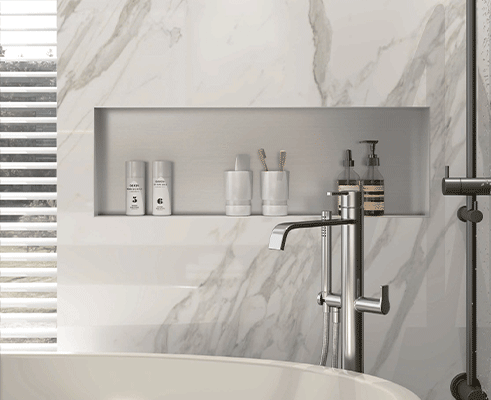
In modern interior design and architectural space planning, integrating minimalist, recessed storage is an effective way to optimize utility without cluttering floor or wall space. Traditional wal...
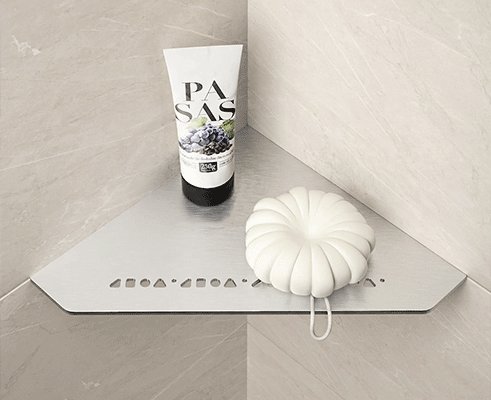
In luxury residential and commercial bathroom design, optimizing shower corner space with durable, corrosion-resistant storage is essential for both functionality and aesthetic appeal. Traditional...
Niche with Partition & LED Light
SBK298-900H-300W-LED Stainless Steel Niche with Partition &a...
In contemporary interior design and upscale bathroom architecture, combining multi-tier recessed wall storage with integrated accent lighting is an effective method to maximize vertical space whil...
Contact JECA Decor
Custom Solutions for Global Projects
Established in 2012, we specialize in high-end decorative accessories. With over ten years of industry experience, we are committed to the product philosophy of "Safety, Practicality, and Advanced Technology".
- ISO9001 Quality Management System
- EU CE certification
- IPMS (Intellectual Property Management System)
- Australian, American, and Canadian standards
We are located in Foshan, Guangdong, just under one and a half hours' drive from Guangzhou Baiyun International Airport, in the heart of the Pearl River Delta Economic Zone.
If you are interested in any of our products, or would like to discuss a custom order, please feel free to contact us. We look forward to building long-term business relationships with clients around the world.