T-Profile vs. U-Profile Decorative Trims: 5 Key Factors That Define Lobby Tile Joint Aesthetics
For high-traffic public spaces such as hotels, shopping malls, and Grade A office buildings, the finish of lobby tile floors shapes visitors’ first impression of the entire property. Yet many projects see their floor aesthetics deteriorate starting from the joints just 1–2 years after handover: grout discoloration, chipped tile edges, and cracking caused by thermal expansion not only compromise visual quality, but also drive up long-term maintenance costs.
Tile joints are never a minor construction afterthought — they are a critical detail that impacts long-term aesthetics, structural stability, and operational expenses. Compared with traditional epoxy grout, industrial-grade metal decorative trims have become the mainstream choice for premium commercial projects thanks to their superior physical protection and durable appearance. Among all available profiles, T-profiles and U-profiles are the two most widely used options for lobby tile finishing. The right selection directly determines final installation quality and long-term performance.
As an experienced manufacturer of stainless steel and aluminum decorative profiles, JECA breaks down the core differences and selection logic of these two profiles from a practical engineering perspective, helping project owners, contractors, and distributors find the optimal solution.
1. Core Differences: T-Profile vs. U-Profile Decorative Trims
The fundamental distinction between T-profiles and U-profiles lies in their cross-sectional structure, which leads to different functional priorities and visual outcomes.
| Profile Type | Cross-Section Structure | Core Function |
|---|---|---|
| T-Profile (Transition Strip) | T-shaped cross-section, with a horizontal flange covering both sides of the tile joint and a vertical leg embedded into the substrate | Cover-type finishing + transition protection, high tolerance and wear resistance |
| U-Profile (Groove Channel) | U-shaped channel, fully embedded into the tile joint with the top surface flush or slightly recessed below the tile surface | Recessed division + linear aesthetics, refined visual effect and expansion buffer |
T-Profile Decorative Trims
The horizontal flange of a T-profile fully covers the edges of adjacent tiles, making it the most versatile option for balancing protection and construction tolerance. It conceals minor chipping and rough cuts from on-site tile cutting, and creates smooth transitions between different flooring materials such as tile, wood, stone, and carpet. It is the most widely used finishing profile in commercial spaces.
U-Profile Decorative Trims
U-profiles are embedded into tile joints as recessed channels, sitting flush with the tile surface and creating subtle shadow lines. They replace traditional grout, absorb thermal expansion and contraction of tiles, and deliver clean, minimalist linear aesthetics, making them the preferred finishing solution for contemporary and ultra-modern premium spaces.
2. 5-Dimension Comparison: What Matters Most for Commercial Lobbies
For high-standard, high-traffic lobbies, profile selection should never be based on appearance alone. Construction feasibility, long-term maintenance, and style compatibility all need to be evaluated. Below is a comparison across 5 key dimensions that matter most to engineering projects:
| Comparison Dimension | T-Profile Performance | U-Profile Performance | Practical Value for Commercial Projects |
|---|---|---|---|
| Joint Tolerance & Imperfection Concealment | Excellent. The wide horizontal flange covers minor chipping, uneven cuts, and inconsistent joint widths. | Moderate. Requires high-precision tile cutting and uniform joint width; edge defects cannot be hidden. | Directly impacts construction efficiency and project acceptance. For large-format tile installation and tight schedules, high tolerance significantly reduces rework costs. |
| Load-Bearing Capacity & Impact Resistance | Outstanding. The flange structure distributes foot traffic and heavy rolling load, effectively protecting tile edges from chipping. | Good. Performance depends on wall thickness; thin-walled profiles may dent under heavy pressure, while industrial thick-walled versions handle high foot traffic well. | Lobbies see constant foot traffic, luggage carts, and cleaning equipment. Deformation resistance directly reduces post-handover repair rates. |
| Visual Style Compatibility | Creates clean, balanced metal dividing lines with moderate visual presence, suitable for luxury, neo-classical, and various commercial styles. | Creates deep, crisp shadow lines with strong linear definition, ideal for minimalist, industrial, and high-end corporate interiors. | Style mismatch disrupts the overall design tone and undermines the premium feel of the lobby. |
| Cleaning & Maintenance Ease | Smooth, flat surface allows scrubber machines and dust mops to clean without dead corners. | Slight recess in the channel requires full grout filling during installation; dust buildup inside the groove needs regular attention. | High cleaning frequency in commercial spaces means easier cleaning directly reduces labor costs. Accumulated dirt quickly degrades the space’s appearance. |
| Material Durability & Service Life | JECA profiles use industrial-grade 304/316 stainless steel with PVD vacuum coating, offering scratch resistance, oxidation resistance, and long-term color retention. | Made with the same premium material standards, formed by precision CNC bending or one-piece extrusion for excellent structural stability. | Oxidation, fading, and rust are the main causes of a dated-looking lobby. Quality materials keep floors looking new for a decade, greatly reducing renovation costs. |
3. Recommended Solutions for 3 Common Lobby Scenarios
Different lobby zones serve different functions, with varying load requirements, environmental conditions, and design goals. Targeted selection balances aesthetics and practicality.
Scenario 1: Hotel Main Entrance & Main Circulation Paths
Key pain points: Constant impact from luggage wheels and high-heel shoes causes tile edge chipping; high visibility requires premium aesthetics; frequent cleaning demands chemical resistance. JECA recommendation: Heavy-duty 304/316 stainless steel T-profiles The wide flange fully wraps tile edges to withstand vertical impact and abrasion, drastically reducing edge chipping. The dense, smooth metal surface resists cleaning chemicals and retains its luster through daily maintenance. Available in brushed, mirror, and PVD finishes (titanium gold, black titanium, rose gold) to match any design scheme.
Scenario 2: Premium Office Buildings, Art Galleries & Flagship Store Lobbies
Key pain points: Pursuit of seamless large-format tile visuals, while expansion joints are structurally necessary; strong design identity requires finishing lines that complement the overall aesthetic. JECA recommendation: Narrow-edge stainless steel U-channel profiles The slim metal channel creates natural shadow lines that fulfill structural expansion joint requirements while enhancing spatial order and minimalist luxury. Low-saturation PVD finishes such as black titanium and champagne gold deliver a subtle, sophisticated look. JECA’s high-precision forming process ensures consistent channel width and straight edges, meeting the strict installation standards of large-format porcelain slabs and sintered stone.
Scenario 3: Transition Zones (Lobby-to-Outdoor, Elevator Lobbies)
Key pain points: Large temperature fluctuations cause significant thermal expansion and contraction, which easily cracks traditional grout; exposure to moisture and rain demands higher corrosion resistance. JECA recommendation: Thick-walled metal transition profiles, with 316 stainless steel preferred for humid/coastal areas Metal profiles naturally accommodate slight dimensional changes, absorbing thermal stress to prevent joint cracking. For coastal or high-humidity locations, 316 marine-grade stainless steel offers superior salt spray and corrosion resistance for long-term rust-free performance. Custom height profiles are available to create smooth transitions between floors with different thicknesses.
4. Frequently Asked Questions (FAQ)
Q1: Why do premium commercial lobbies replace traditional grout with metal decorative trims?
Traditional epoxy grout typically discolors, darkens, powders, and cracks within 1–2 years under heavy foot traffic, chemical cleaning, and thermal cycling. Beyond aesthetic damage, repairs require facility downtime and disrupt daily operations. JECA industrial-grade stainless steel trims provide physical edge protection with stable material performance. Our PVD coating retains color and luster for decades with minimal upkeep, making it a cost-effective long-term investment for premium commercial properties.
Q2: Which is better for large-format tiles (900×1800mm+ slabs) — T-profiles or U-profiles?
It depends on your construction precision and design direction:
- Choose T-profiles if your project has a tight schedule, on-site cutting may leave minor edge imperfections, or you need higher construction tolerance. The flange covers small defects and helps ensure smooth project acceptance.
- Choose U-profiles if you use factory-precision cut tiles, have high installation accuracy, and aim for a minimalist design with deep, defined linear divisions.
Q3: How do I choose between 304 and 316 stainless steel? Does surface finish affect service life?
For standard indoor commercial lobbies, 304 stainless steel delivers reliable performance at a more cost-effective price point. For coastal locations, outdoor-adjacent areas, humid zones, or projects with higher corrosion resistance requirements, 316 stainless steel is recommended. Surface treatment directly impacts aesthetic longevity. Standard electroplating is prone to scratching and fading. JECA uses PVD vacuum coating technology, which creates a dense, highly adhesive layer with far superior scratch and oxidation resistance. Our titanium gold, black titanium, and rose gold finishes retain uniform color long-term and are the standard choice for high-end projects.
Q4: Does JECA offer custom engineering solutions? What is your delivery capacity?
JECA is a Foshan-based original manufacturer with full OEM/ODM customization capabilities. We support full dimensional customization (height, width, wall thickness, length) and offer multiple surface finishes including brushed, mirror, sandblasted, and PVD coated to meet the unique requirements of large-scale commercial real estate and hospitality projects. Our products are exported to over 100 countries worldwide with mature export packaging and logistics systems. Standard orders have a 15–25 day lead time, and we can schedule production to align with your project timeline.
Final Takeaway
T-profiles excel in construction tolerance and edge protection, making them a versatile choice that balances practicality and aesthetics. U-profiles stand out for refined design and linear sophistication, ideal for spaces pursuing a minimalist aesthetic. For commercial projects, there is no universally “better” option — only the option that fits your specific scenario. If you have project drawings or specific selection questions, contact the JECA technical team for customized finishing solutions and a detailed quotation.
Contact JECA DECOR
Explore JECA DECOR products
LED Light Profile Accessories
DD05 LED Light Profile Accessories: Precision Flexible LED S...
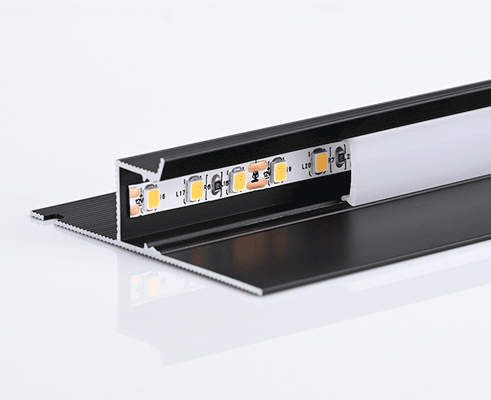
In contemporary interior architecture and luxury space design, creating clean ambient lighting lines, indirect LED channels, and seamless linear illumination across ceilings, walls, and floors req...
Skirting Profiles
SY044 Skirting Profiles: 304 Stainless Steel Skirting Tile P...
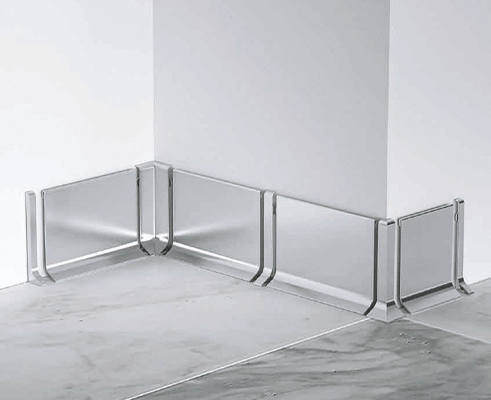
Exposed edges on wall corners, floor transitions, stair treads, and tile perimeters are highly vulnerable to chipping, impact damage, and uneven alignment during daily use. Without a precision-engi...
Stair Nosing Profiles for Tiles
AD750 Stair Nosing Profiles for Tiles: High-Safety Aluminum ...
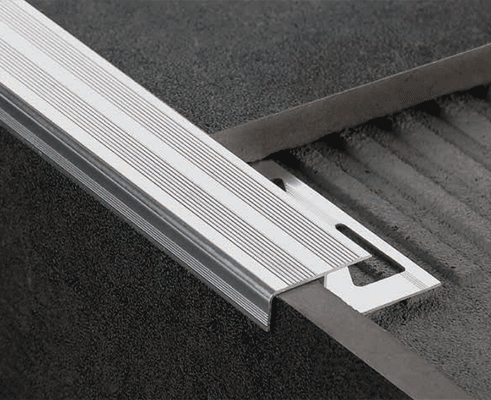
Stair treads in high-traffic commercial and residential environments face heavy point loads and continuous foot traffic, making exposed tile edges vulnerable to chipping, cracking, and premature w...
Contact JECA Decor
Custom Solutions for Global Projects
Established in 2012, we specialize in high-end decorative accessories. With over ten years of industry experience, we are committed to the product philosophy of "Safety, Practicality, and Advanced Technology".
- ISO9001 Quality Management System
- EU CE certification
- IPMS (Intellectual Property Management System)
- Australian, American, and Canadian standards
We are located in Foshan, Guangdong, just under one and a half hours' drive from Guangzhou Baiyun International Airport, in the heart of the Pearl River Delta Economic Zone.
If you are interested in any of our products, or would like to discuss a custom order, please feel free to contact us. We look forward to building long-term business relationships with clients around the world.