What Are the Common Types and Shapes of Stainless Steel Profiles?
What This Guide Covers
Decorative trims close the exposed edge of a tiled surface and give an installation a deliberate finish line. The section, height and finish should be chosen at the same time as the tile, not after the tiling has started.
This guide is written around the question behind this page — what are the common types and shapes of stainless steel profiles — and stays with the decisions that can be made from a drawing and a sample, before any product data is assumed.
What Decorative Tile Trims Actually Do
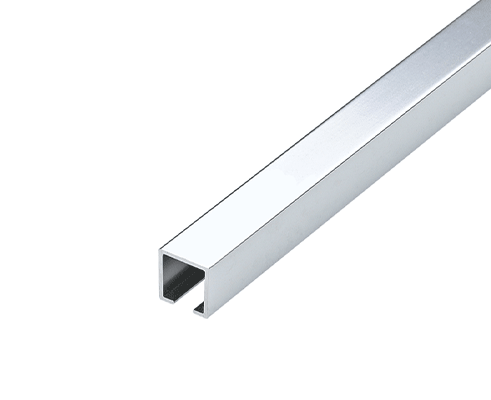
A decorative tile trim can act as a border, a transition, an edge protection or simply a visual divider between two tiled fields. In each case it has to reconcile the tile thickness, the adhesive bed and the adjacent finish.
The visible face is the part everyone notices, but the leg that disappears into the adhesive bed is what keeps the line straight. A section that is too shallow will drift as the tile is set out.
How to Specify It: A Practical Checklist
- Match the profile height to the tile thickness plus the adhesive bed.
- Choose the visible face width and surface finish to suit the design.
- Check the transition detail where the trim meets another floor or wall finish.
- Confirm which corner, end and connector pieces are available in the same range.
- Approve the finish from a sample under the site lighting.
Work through the list with the tile, the substrate and the setting-out drawing in front of you. Most specification errors come from deciding one item in isolation.
Installation and Detailing Notes
Set out the trim line on the substrate before fixing tile. Dry-fit a short length with a tile to check that the visible face sits level, then fix the profile to a stable base and work outwards from the most visible corner.
Keep the protective film in place through grouting. Where two trims meet, use the matching connector piece where one exists, and keep the joint on a deliberate line in the setting-out.
Common Mistakes to Avoid
- Choosing the trim from a photograph without checking the section height.
- Leaving the trim to be set out after the tiling has begun.
- Terminating a border without an end cap or a return.
- Mixing finishes between the trim and the adjacent metal details.
Working With Your Supplier
Before placing an order, request a section drawing, the available heights and finishes, a physical sample, and the list of matching corner, connector and end pieces. Confirm the intended application and the fixing method for your substrate. Section codes, dimensions and finish availability should always be taken from the current catalogue rather than assumed from a photograph — see the stainless steel decorative profiles range for the live reference.
Frequently Asked Questions
Can one trim section work for both borders and transitions?
Sometimes, but the tile build-up and the adjacent finish usually differ. Check both conditions before reusing a section.
When should the trim be ordered?
With the tile, so heights, finishes and corner pieces are approved before the setting-out is fixed.
What should be requested from the supplier?
Section drawings, available heights and finishes, physical samples, and the full list of matching corner and end pieces.
Key Takeaways
- Select the trim with the tile, not after it.
- Check the leg depth as well as the visible face.
- Approve the finish from a sample on site.
Contact JECA DECOR
Explore JECA DECOR products
Plaster Profiles
AJR7740 Plaster Profiles: High-Performance Aluminum Corner P...
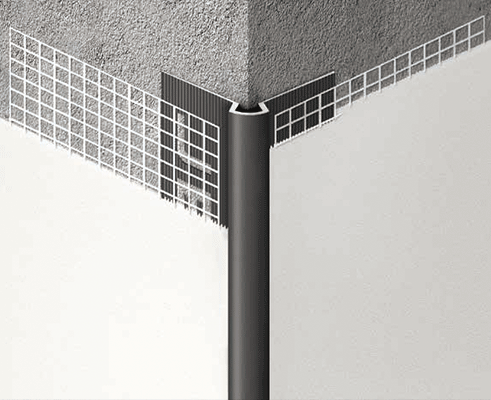
When constructing external and internal rendered walls, protecting exterior corners against impact damage and cracking is a critical requirement for long-term structural integrity. Without a speci...
Ceiling Profiles
ALE8073 Ceiling Profiles: Precision Aluminum Solutions for M...
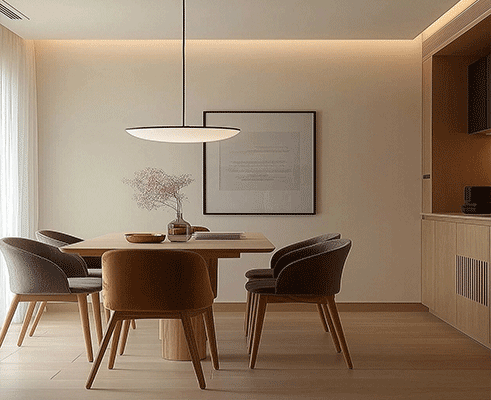
In contemporary interior architecture and luxury space design, creating clean perimeter shadow gaps, indirect LED lighting coves, and seamless transitions between ceilings and walls requires speci...
Tile Profiles for Countertops
AT7767 Tile Profiles for Countertops: Precision Aluminum Edg...
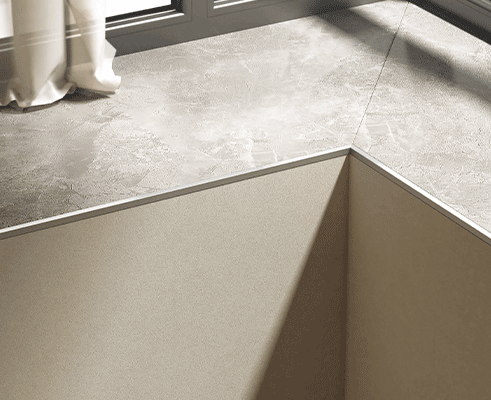
In modern interior architecture, countertop edges, window sills, stair steps, and outdoor patio transitions require both structural protection and refined aesthetic details. Unprotected countertop...
Contact JECA Decor
Custom Solutions for Global Projects
Established in 2012, we specialize in high-end decorative accessories. With over ten years of industry experience, we are committed to the product philosophy of "Safety, Practicality, and Advanced Technology".
- ISO9001 Quality Management System
- EU CE certification
- IPMS (Intellectual Property Management System)
- Australian, American, and Canadian standards
We are located in Foshan, Guangdong, just under one and a half hours' drive from Guangzhou Baiyun International Airport, in the heart of the Pearl River Delta Economic Zone.
If you are interested in any of our products, or would like to discuss a custom order, please feel free to contact us. We look forward to building long-term business relationships with clients around the world.